How Should Engineers Approach PCB Material Selection for AI Server Boards?
AI servers combine high-speed data transmission, dense interconnections, and high power consumption in a limited space. As interfaces such as PCIe, high-speed Ethernet, and advanced SerDes links move toward higher data rates, the PCB material becomes a critical factor in signal integrity, thermal reliability, and manufacturing consistency.
Choosing a material based only on its dielectric constant or advertised data rate is not sufficient. Engineers must evaluate the complete channel, including the laminate, copper foil, stackup, vias, connectors, and package transitions.
This article explains the key considerations for PCB material selection for AI server boards and discusses how early cooperation with an experienced PCB manufacturer can support reliable and manufacturable designs.
PCB Instant Quote
.my-button {
display: inline-block;
padding: 10px 50px;
font-size: 16px;
text-align: center;
text-decoration: none;
background-color: blue;
color: #fffff0;
border: none;
border-radius: 5px;
font-weight: bold;
cursor: pointer;
box-shadow: 0px 2px 5px rgba(0, 0, 0, 0.3);
transition: background-color 0.3s ease, transform 0.3s ease;
}
.my-button:hover {
background-color: #C23C30;
transform: scale(1.05);
}
Why Is Material Selection Important for AI Server PCBs?
AI server boards may contain high-speed links, large BGA packages, complex power-distribution structures, and high-density routing. These features place demanding requirements on PCB materials.
An unsuitable laminate may contribute to:
Excessive insertion loss in high-speed channels
Impedance variation
Increased signal attenuation
Greater sensitivity to crosstalk
Thermal expansion and reliability concerns
Difficulties in multilayer lamination and registration
The material should therefore be selected according to the actual electrical and mechanical requirements of the board rather than simply choosing the most advanced or expensive laminate available.
Key Factors in PCB Material Selection for AI Server Boards
1. Dielectric Constant and Dissipation Factor
Two important electrical properties are the dielectric constant (Dk) and dissipation factor (Df).
Dk affects signal propagation speed, impedance, and electrical length.
Df indicates how much signal energy is dissipated as heat within the dielectric material.
For high-speed AI server channels, a stable and appropriately low Df can help reduce dielectric loss. However, the lowest Df value is not necessarily the only selection criterion. Engineers should also consider Dk stability, copper roughness, dielectric thickness, and the complete channel-loss budget.
Material properties should be evaluated at relevant frequencies and under suitable test conditions. Dk and Df values from different manufacturers should not be compared without checking whether the test methods and frequency points are consistent.
2. Copper Roughness and Conductor Loss
At high frequencies, conductor loss becomes increasingly important. The roughness of the copper surface can increase the effective path length of high-frequency current and contribute to signal attenuation.
When selecting materials for AI server boards, designers should consider:
Copper foil profile
Surface treatment
Trace width and thickness
Signal frequency and rise time
Total channel length
Compatibility between the copper foil and the lamination process
A low-loss dielectric cannot fully compensate for excessive conductor loss. Therefore, laminate selection and copper-foil selection should be evaluated together.
3. Stackup and Dielectric Thickness
The PCB stackup determines the relationship between signal layers, reference planes, and power planes. It also affects impedance, crosstalk, propagation delay, and manufacturability.
A suitable AI server PCB stackup should provide:
Controlled dielectric thickness
Stable reference planes
Adequate spacing between sensitive signal layers
Sufficient power and ground distribution
Suitable routing space for high-density BGA packages
Practical layer-to-layer transitions
The dielectric thickness should be selected together with trace width, trace spacing, copper thickness, and the required impedance. A material with excellent electrical properties may still be unsuitable if its available thicknesses cannot support the required stackup.
4. Thermal Stability and Z-Axis Expansion
AI server boards may experience substantial thermal loading because of high-power processors, accelerators, memory devices, and voltage-regulation circuits.
In addition to electrical performance, material selection should consider:
Glass transition temperature
Decomposition temperature
Z-axis coefficient of thermal expansion
Thermal stress during assembly
Reliability of plated through-holes
Compatibility with lead-free reflow processes
A high-Tg material can provide useful thermal stability, but Tg alone does not determine overall PCB reliability. The complete material system, copper structure, board thickness, via design, and thermal-cycle conditions must also be considered.
5. Moisture Resistance and CAF Reliability
Moisture absorption can affect dielectric performance and may influence reliability under certain environmental conditions. For high-density multilayer boards, engineers should also consider the material’s resistance to conductive anodic filament formation, commonly known as CAF.
The appropriate material should be evaluated according to:
Product operating environment
Layer spacing
Via-to-via distance
Lamination quality
Moisture exposure
Required reliability level
These factors may be particularly relevant when AI server boards are deployed in data-center environments with strict reliability and service-life requirements.
Which PCB Materials Can Be Considered for AI Server Boards?
There is no single material suitable for every AI server PCB. The appropriate choice depends on the highest-speed interface, channel length, loss budget, thermal requirements, and manufacturing conditions.
Material Category
Main Characteristics
Potential Application Considerations
Standard FR-4
Cost-effective and widely available
May be suitable for power, control, and lower-speed sections when electrical requirements permit
High-Tg FR-4
Improved thermal stability compared with standard grades
Useful for boards requiring enhanced thermal and mechanical performance
Low-loss laminates
Reduced dielectric loss and more controlled high-frequency performance
Suitable for demanding high-speed signal layers
Very-low-loss laminates
Designed for more demanding high-frequency channels
Consider for long or loss-sensitive SerDes links after channel analysis
Mixed-material stackups
Combine different material grades within one PCB structure
May balance high-speed performance, cost, and overall manufacturability
For a complex AI server board, it may be unnecessary to use an advanced low-loss material throughout the entire stackup. If the design permits, critical high-speed layers can be assigned suitable low-loss materials while less demanding sections use more economical materials.
However, mixed-material lamination requires careful engineering review. Differences in resin systems, pressing conditions, thermal expansion, dielectric thickness, and material compatibility can affect registration and reliability.
How Does Material Selection Affect PCB Manufacturing?
Material selection must be coordinated with the PCB fabrication process. A material that performs well electrically may still introduce manufacturing challenges if the supplier, thickness, or processing requirements are not properly controlled.
The following factors should be reviewed before production:
Manufacturing Consideration
Potential Effect on the Finished PCB
Material availability
May influence lead time, production continuity, and material substitution options
Lamination compatibility
Affects bonding quality, layer registration, and board thickness
Resin flow characteristics
Influences dielectric thickness and copper-feature filling
Drilling and desmear requirements
May affect hole quality and interconnection reliability
Thermal expansion
Influences plated-hole reliability and dimensional stability
Material thickness tolerance
Can affect impedance and electrical-length consistency
Copper foil selection
Influences conductor loss and impedance control
Material lot consistency
Helps maintain repeatable electrical performance during volume production
The final material specification should identify the approved material family, relevant electrical properties, thickness requirements, and any permitted alternatives. Uncontrolled material substitution may change impedance, insertion loss, and lamination behavior.
How Can PCBBUY Support Complex High-Speed PCB Projects?
PCBBUY focuses on PCB applications including automotive electronics, industrial control, power and electrical systems, power supplies, energy storage, new energy, and embodied robotics. These applications may require complex multilayer structures, high-density interconnections, controlled impedance, and stable manufacturing performance.
Although AI server boards have their own application-specific validation requirements, several of PCBBUY’s manufacturing capabilities are relevant to complex high-speed PCB development:
High-frequency and high-speed materials: Support for materials from Rogers, TUC, Isola, and other manufacturers
Low-Dk and low-Df material applications: Support for designs requiring careful control of high-speed transmission loss
Mixed-material lamination: Support for asymmetric and heterogeneous mixed-material structures
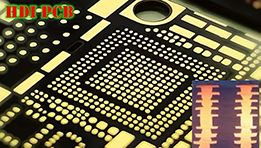
HDI manufacturing: Support for first-order and second-order HDI structures
Laser-drilled blind vias: Minimum laser-drilled blind via diameter of Φ0.075 mm
Mechanically drilled blind vias: Minimum mechanically drilled blind via diameter of Φ0.15 mm
Large-size PCB production: Maximum production size of 1000 × 600 mm
Quality inspection: AOI, flying-probe testing, and four-wire low-resistance testing
For AI server-related projects, PCBBUY’s engineering team should review the complete stackup, approved material list, impedance requirements, high-speed routing constraints, via structures, and lamination conditions before production.
These capabilities support complex PCB manufacturing, but they do not independently establish AI server or high-speed interface compliance. Final performance must be confirmed through the complete electrical design, channel analysis, manufacturing requirements, and applicable validation procedures.
What Should Be Confirmed Before Selecting the PCB Material?
Before finalizing the material for an AI server PCB, designers and manufacturers should jointly review:
The highest data rate and relevant channel-loss budget
Required Dk and Df values at the appropriate frequencies
Copper foil roughness and conductor-loss requirements
Complete layer stackup and dielectric thicknesses
Differential impedance targets
Thermal expansion and reliability requirements
Material availability and approved alternatives
Lamination compatibility and manufacturing tolerances
Via, BGA, and high-density interconnection structures
Signal-integrity simulation and prototype-validation requirements
Material selection should be completed before the stackup and routing rules are frozen. Late material changes may require recalculating impedance, modifying trace geometry, or repeating signal-integrity analysis.
Conclusion
PCB material selection for AI server boards requires a balanced evaluation of electrical performance, thermal reliability, manufacturing feasibility, and cost. Dk and Df are important, but they should be considered alongside copper roughness, dielectric thickness, stackup design, thermal expansion, and material consistency.
For high-speed AI server channels, low-loss or very-low-loss laminates may be necessary. However, the correct material grade depends on the actual channel requirements rather than on the data rate alone. In some designs, a carefully engineered mixed-material stackup may provide a practical balance between performance and cost.
Early cooperation with the PCB manufacturer can help verify material availability, lamination compatibility, impedance control, and process capability. For complex multilayer projects, this engineering coordination is essential to achieving a predictable and manufacturable PCB structure.
FAQ
1. Why is PCB material selection important for AI server boards?
Material selection affects signal loss, impedance, propagation delay, thermal stability, and long-term PCB reliability. These factors become increasingly important in high-density, high-speed AI server designs.
2. Do AI server PCBs always require very-low-loss laminates?
No. The required material depends on the channel length, interface data rate, loss budget, routing structure, and equalization capability. Lower-speed or noncritical sections may use more economical materials if the design permits.
3. What are Dk and Df in PCB materials?
Dk, or dielectric constant, affects signal propagation speed and impedance. Df, or dissipation factor, describes dielectric energy loss. Both properties should be evaluated at relevant frequencies and under comparable test conditions.
4. Is a lower Df value always better?
A lower Df value can help reduce dielectric loss, but it is not the only selection criterion. Dk stability, copper roughness, thermal expansion, material availability, processing requirements, and cost must also be considered.
5. Can mixed-material stackups be used in AI server PCBs?
Yes, mixed-material stackups may be used to balance high-speed performance and cost. However, differences in resin systems, lamination conditions, thermal expansion, and dielectric properties must be evaluated before production.
6. Why should copper roughness be considered during material selection?
Copper roughness can increase high-frequency conductor loss. Therefore, copper foil characteristics should be evaluated together with the laminate’s dielectric-loss properties when designing loss-sensitive high-speed channels.
7. Can PCBBUY provide high-speed PCB materials for complex multilayer designs?
PCBBUY supports high-frequency and high-speed materials from manufacturers such as Rogers, TUC, and Isola, as well as mixed-material lamination and HDI structures. Specific material availability and process feasibility should be confirmed during engineering review.
8. What information should be provided when requesting an AI server PCB quotation?
The quotation package should include the fabrication data, complete stackup, approved material requirements, impedance targets, copper specifications, via and HDI details, lamination requirements, and relevant inspection or validation criteria.